
It is extraordinary that this is falling on deaf ears. OTA broadcat is the last breath of a system that can't be easily defeated remotely.
You can hook a coax between a pair of rabbit ears and a TV right now and get the DRM'd signals to view. There is no problem with non-gateway devices and DRM. It's the very small number of HDHR-type users that want to use ethernet/wifi to repeat that DMR's signal to a non-TV consumer.
Well also recording to a central DVR that all TVs can access. Something even Dish Network has been able to do for a decade.
I disabled the ATSC3 channels on my Mother-in-laws TV because they were problematic.
Sometimes they worked, other times not so much, and she complained it took a long time for them to "come in".*
2 Likes
Yay?
1 Like
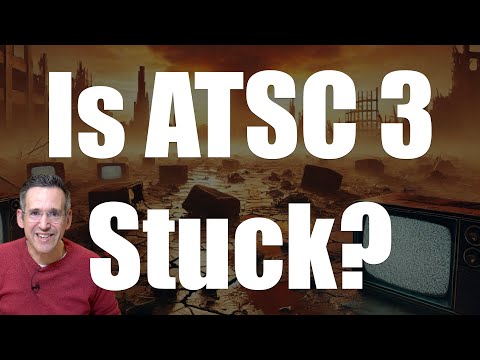
FCC Report Suggests ATSC 3.0 Transition is Stuck? Over the air television update

In this video, Lon Seidman discusses a recent FCC report highlighting the stalled transition to ATSC 3.0 (the latest over-the-air television standard). The report outlines significant obstacles to adoption, particularly concerning Digital Rights Management (DRM), cost, and technology compatibility. Stakeholders indicate that the adoption timeline remains unclear, as no transition date is being recommended and the current market approach is preferred over mandated deadlines.
Key Points
Report on ATSC 3.0 transition
The video outlines a report submitted to the FCC regarding the transition to ATSC 3.0, revealing that it is currently stuck due to various challenges including cost, technology, and lack of widespread consumer adoption.
Current state of ATSC 3.0 adoption
The consensus among stakeholders is that there should not be a fixed transition date yet, as consumer adoption is low, and only premium TVs mostly have ATSC 3.0 tuners. The transition is being market-driven, with no push from the FCC for a deadline.
Challenges with DRM and costs
The video highlights a 'chicken and egg' problem: high costs associated with the transition, both for consumers and cable/satellite providers, largely due to DRM requirements which complicate broadcasting and receiving ATSC 3.0 signals.
Consumer representation and issues
Consumer interests regarding DRM were not adequately represented in the report. Lon criticizes the lack of acknowledgment of consumer feedback against encrypting over-the-air signals, which creates barriers to accessing content.
Technology and compatibility problems
Many existing devices and entry-level TVs cannot support ATSC 3.0 due to encryption technology primarily being limited to Android-based systems. This complicates market readiness as consumers are unable to utilize their current devices.
Future of ATSC 3.0
The transition to ATSC 3.0 will likely remain slow unless critical issues are addressed, particularly those around DRM and compatibility with consumer devices. The absence of solutions for facilitating access to encrypted signals poses a risk to the overall transition.
5 Likes
What happens when several giant, self-serving industry lobbies go up against another giant, self-serving industry lobby?
There's even more on the FCC's Filing Page from various industry groups in both directions, even though the deadline for submitting comments has passed.
2 Likes
The enemy of our enemy is our friend in this case
1 Like
Good reads there now, as responses continue to get posted.
1 Like
Wow, the initial comment period is almost two months in the past now. Made me take a look and it appears the government added an extended "Reply Comments" period:
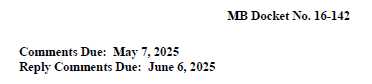
But even that is well past due. I wonder if they'll be forced to accept and read them anyway (assuming they are reading the initial ones)?
1 Like
Lon's slowly getting more fed up with the ATSC 3.0 fiasco as many of us are, you can tell in his latest video released a few hours ago...
6 Likes
I'm happy that he is still pushing on this though.
1 Like
The spat between Pearl and SiliconDust is getting worse.
This is making me think even the faint hope of getting DRM on the HDHRs is probably gone, unless the FCC outright bans it.
3 Likes
The current administration will do whatever the media cartels pay them to do.
Man. That response from Silicondust really shines a light on how incompetent or more likely nefarious the A3SA group is acting.
I agree that the whole NDA thing for public broadcast specifications is really stepping over the line. They need to make everything public and available to scrutiny.
Pearl TV, not the A3SA. Though the lines are blurred.
Pearl’s membership, comprising more than 820 network-affiliated TV stations, consists of eight of the largest broadcast companies in America including: Cox Media Group, the E.W. Scripps Company, Graham Media Group, Hearst Television Inc., Gray Television, Sinclair Broadcast Group, and TEGNA, Inc.
I'm going to go with nefarious.
2 Likes
5 Likes
Hopefully they can get FCC on board with what is going on and how DRM is just dumb and not realistic. They want to push ATSC 3.0 but have no pathways for most of the operating systems out there except android. If DRM goes away then everyone would want ATSC 3.0 to move forward.
2 Likes