Windows ADB Tuner Bridge App

ADB-Go for Windows: A simple, budget-friendly tuning setup

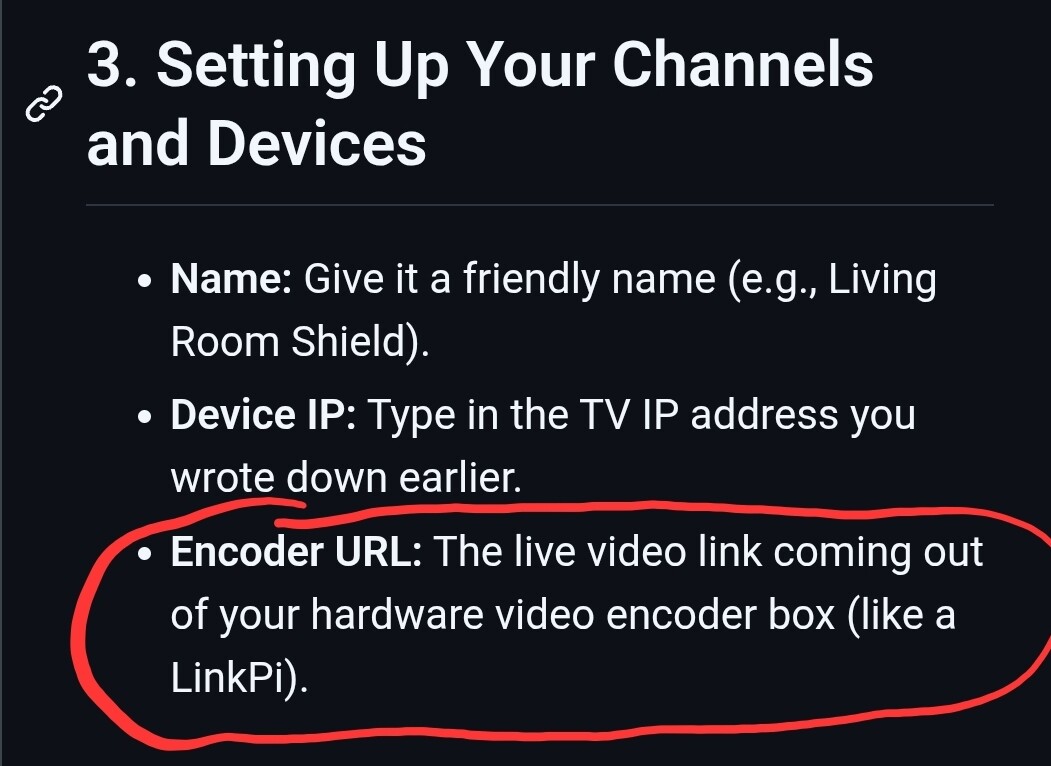
I built a Windows App ADB Bridge for my personal use. I wasn't planning to release it since it didn't really do anything special. When my Roku Tuner stopped working with YouTube TV, after they pulled deeplink support from their Roku app, I promoted this project as my main backup option for channels. I've worked on and off on it for a few months to make it better fit my needs. I had only been using my LinkPi and 2 Onn 4k boxes with it, but I really wanted at least 3 tuners with it. To keep from buying another LinkPi, I started working on some other options for adding extra tuners. I figured since it is a Windows only application, why not use the PC as an encoder. There is a post on this board about using a USB HDMI capture card as a tuner.

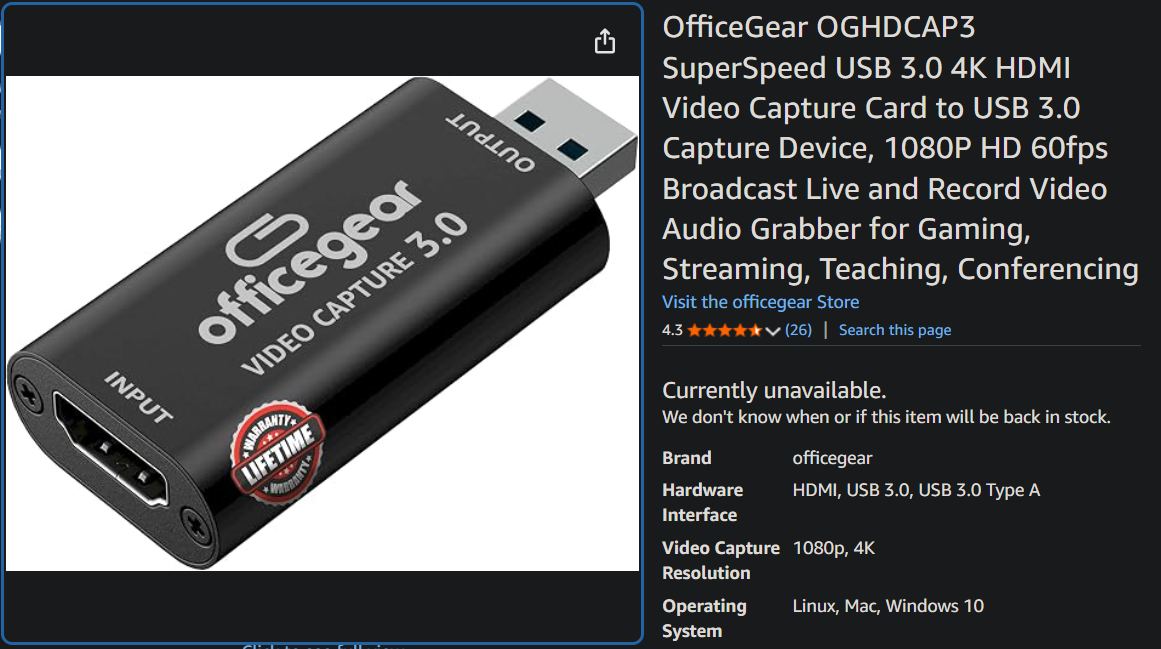
With this as a guide, I added support for USB To HDMI Capture Cards like this one on Amazon as a tuner option. It works pretty well.

I figured with the recent uptick in TVE stations dropping off someone might be able to use it, so I decided to release it. Feel free to test it out. The GitHub Repo has basic info about setting it up. You should be able to find many posts on here about locating the proper deeplinks and needed Android Intent links for using ADB commands with your apps.

A single 1080p video stream uses a lot of USB bandwidth. If you are plugging two capture cards into the same PC, try to spread them out. Plug one into the back of your computer (directly into the motherboard) and plug the second one into the front panel of your PC case. This prevents the USB ports from getting overloaded and provides better playback.

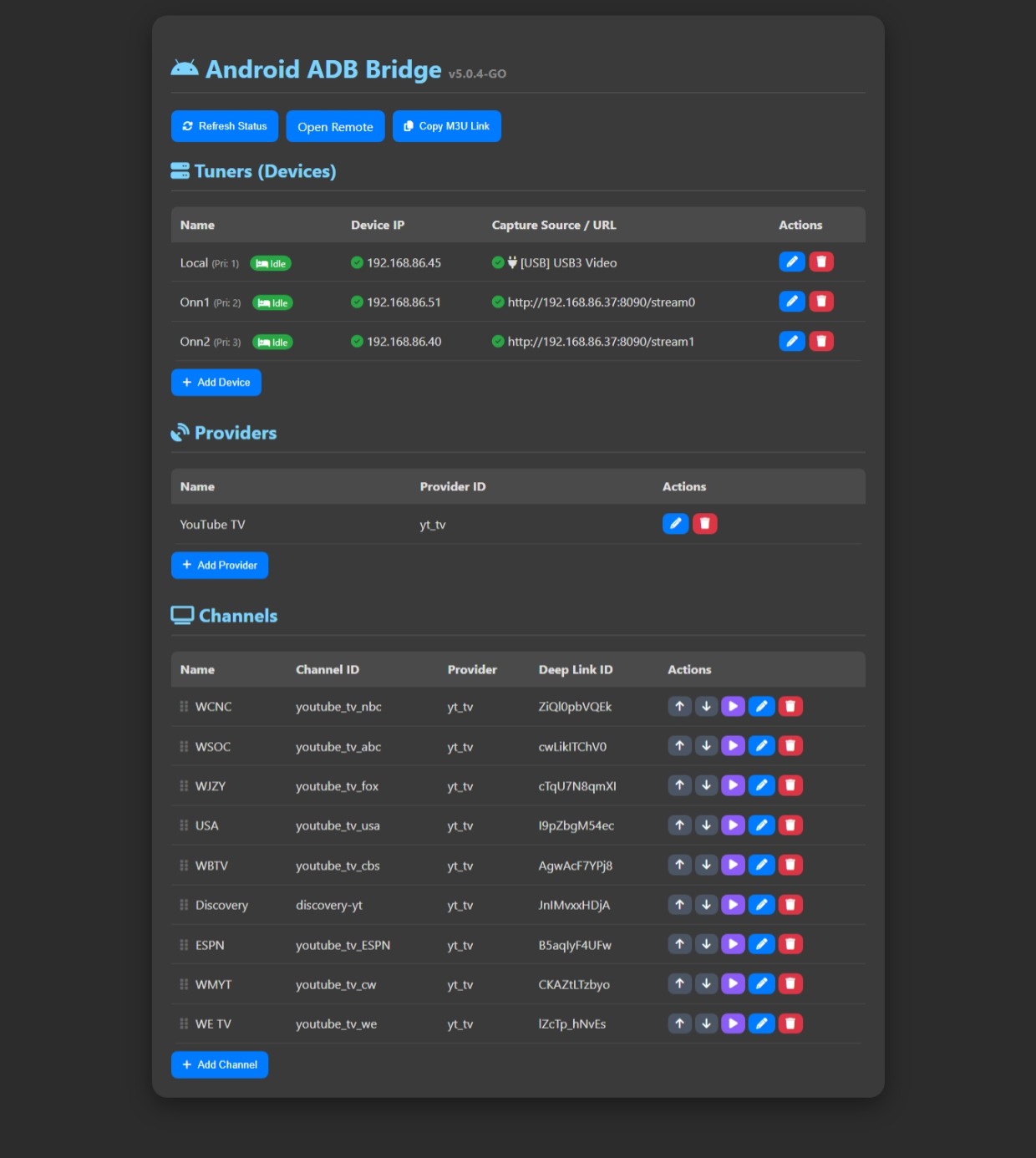
v5.0.5,adds a manual tuner release icon added in case one hangs.

v5.0.6 Adds Audio Sync for Local Tuners.

3 Likes

If you're attaching the usb capture cards directly to your computer, you can get some coolers for the usb capture cards if they get too hot and get a couple of zip ties to attach it to them. Something like this is a good idea
https://a.co/d/0foVdV9L

Since I use a LinkPi and a bigger cooler, my usb stick is fine

I probably should say the app auto detects the USB dongles and populates the drop-down with them.

Hehehe, did you know I have that exact one? I can give this a try in little while!

Me too. I think it wouldn't work with my linkpi so I stored it in my try it later box with several Onn sticks I bought for like $9 apiece. :grin:

You are 100% right about heat with these USB capture dongles, they need cooling. I keep all my goodies in a well ventilated area with a USB fan moving cool air across them all.

This is the one I use:

2 Likes

Bobby, thanks for doing this and making it available to everyone - especially the old die-hard Windows users. I can't tell you how much I appreciate not having to adopt another operating system just to keep the home DVR running. The stuff you have put out over the past year has been absolutely stellar, and just darn easy to setup and use.

And just so no one misconstrues something as a negative inference, I really appreciate all the developers efforts in creating and keeping the non-native Channels DVR tuners going. Obviously the software would be nearly worthless without it.

Thank you.

How do you edit or delete a channel?
Oops, never mind.

If you mean how do you add channels into it, I'll post a quick how to to github in a little while. What are you using for your provider? DirecTV or some other provider?

I was looking at the interface on my tablet and part of the screen was cut off.
Sorry.

Very nice project, @Bobby_Vaughn!

I could almost use it if it was not for the required hardware encoder. :frowning:

It wouldn't be possible to take advantage of the Windows PC and implement the encoder as a software application, and then run a web server on the PC to provide the URL for Channels?
Just thinking out loud but it's probably easier said than done.

@mjitkop It does not require a seperate hardware encoder. Although a LinkPi will provide better results, you can use a USB Capture Card and an Android TV stick with this. From the GitHub Readme:

7. Using a Local USB Capture Card (New!)

If you don't want to buy or configure a network encoder (like a LinkPi), you can now use a standard, inexpensive USB HDMI capture dongle plugged directly into your PC! The Android Bridge will automatically find the capture card, grab the video, and send it straight to your DVR.

Step 1: The Hardware Setup

  1. Plug your Android TV stick directly into the HDMI port of your USB capture card.
  2. Plug the USB capture card into an available USB port on your PC.
  3. Power the Android TV stick using its normal wall plug.

Step 2: Adding it to the Dashboard

  1. Open the Android ADB Bridge web dashboard.
  2. Click Add Device under the Tuners section.
  3. Enter a friendly name and the IP address of your Android stick.
  4. Change the Capture Type dropdown to Local USB Capture Card.
  5. The app will automatically search your PC for connected hardware. Simply select your capture card from the Video and Audio dropdown menus (it will usually be named something like USB3 Video, USB Video, or FHD Capture).
  6. Click Save. The dashboard will display a green checkmark once the camera is ready to stream!

** Pro-Tip for Multiple Dongles:**
A single 1080p video stream uses a lot of USB bandwidth. If you are plugging two capture cards into the same PC, try to spread them out. Plug one into the back of your computer (directly into the motherboard) and plug the second one into the front panel of your PC case. This prevents the USB ports from getting overloaded and guarantees smooth playback.

Before you buy a cheap capture device, give me a few days to test a new one I have coming in tomorrow. The little cheap ones get hot and disconnect if you do not have a fan on them. I am looking at this one to see if it will work better:

2 Likes

My bad, @Bobby_Vaughn, I stopped reading the Readme after I saw this:

I thought that was a required input.

Thank you for clarifying this.

I'm looking forward to your results with the CENMATE capture card.

No problem. I'm sure a lot of people will assume it is only for hardware encoders. I was testing it on the WNBA game last night with my $8 capture dongle and noticed a few small blips during fast action. I'm hoping a better capture card will help with that, but the cheap one does work well if it stays cool.

Edit: I'm also going to test this Acer one:

2 Likes

for what it's worth, I got 2 of these and have been very happy for $8. currently using them on linkpi's so using usb2 and 50fps, but they do capture 60fps plugged into a usb3 port. I actually have one recording news all day everyday and it's cool to the touch. no stock, but there are many brands using same device.


I think I'll pick up one of the monster capture's from walmart $15 since it has hdmi passthru

2 Likes

I like the looks of the monster. The larger ones should help dissipate the heat better.

If someone wanted to get 3 or 4 of these going, could they be plugged into a USB3 hub, then into a USB3 port on the PC?

You can not reliable run more than one through a single USB port because of the amount of data being sent to the PC. You would want to use ports on different controllers. Usually the ones on the front and back of a PC are not sharing the same controller and more powerful PC's can have multiple different USB ports on multiple different controllers. You can also add USB 3 PCIe cards to the desktop that have separate controllers for each port..

Understood. Thanks for clarifying.